Three Regions Sign Declaration to Strengthen ARRRA Port Competitiveness
Flanders, the Netherlands, and North Rhine-Westphalia signed a cooperation declaration on October 5, 2026, targeting four priorities: circular economy harmonization, energy infrastructure expansion, sustainable inland navigation, and automated logistics. The agreement aims to address regulatory fragmentation and high energy costs threatening the €65 billion ARRRA cluster.
By The Shipping Chronicle · AI-assisted reporting and explanations
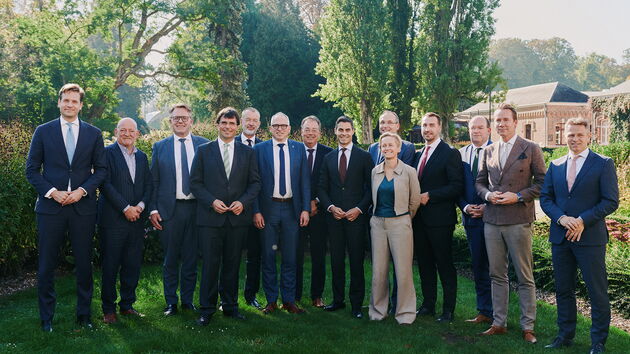
Prime ministers and regional ministers from Flanders, the Netherlands, and North Rhine-Westphalia convened in Meise, Belgium, on October 5 at the Port Summit to address critical competitiveness challenges facing Europe’s most vital port-industrial cluster. The meeting concluded with a formal declaration outlining enhanced cross-border cooperation among the three regions and major port authorities.
## Summit Overview and Key Agreements
This collaborative framework is designed to protect the economic standing of the Antwerp-Rotterdam-Rhine-Ruhr Area (ARRRA), a region central to Europe’s supply chains, energy grid, and industrial base. The summit brought together government leaders and chief executive officers from key ports including Rotterdam, Antwerp-Bruges, Duisburg (Duisport), Cologne/HGK, Moerdijk, Oostende, and North Sea Port. These entities form the physical backbone of the ARRRA cluster.
Despite this economic weight, the sector faces headwinds from international competition, prolonged licensing procedures, divergent national regulations, and volatile energy prices. The declaration acknowledges these threats and commits to aligning infrastructure planning, knowledge sharing, and industrial capacity to build resilience against geopolitical and economic shifts.
## The Four Priority Areas: Circular Economy, Energy, Inland Navigation, Automation
Four specific priorities emerged from the negotiations, each targeting structural inefficiencies in the region. First, participants agreed to strengthen circular value chains by creating a cross-border internal market for secondary raw materials. This requires regulatory harmonization to upscale circular economies and ensure investment certainty for businesses dealing in recycled inputs.
Second, the parties committed to accelerating the expansion of energy infrastructure, specifically regarding carbon dioxide (CO₂) transport and storage networks, as well as hydrogen pipelines. By organizing cooperation more efficiently, the goal is to remove bottlenecks that delay cross-border energy projects. Third, the declaration addresses sustainable and resilient inland navigation. Recognizing that climate change increases the vulnerability of waterways used for bulk transport, the regions pledged closer cooperation on strategic water management and sustainability measures for barges and vessels. Fourth, the groups will pursue innovative logistics through automated freight transport and drones. Utilizing cross-border corridors like the route between Antwerp and Rotterdam, they plan to implement automated road and water transport, alongside harmonized rules for drone operations.
## Economic Impact and Job Statistics
Currently, this interconnected network generates approximately €65 billion in added value annually and supports nearly 600,000 jobs across the region. The agreement seeks to preserve this economic output by ensuring a level playing field. Earlier in the summer, the participating ports had issued a joint letter urging for faster permitting processes through designated "acceleration areas," validating that ports are already working closely on these issues but now have political backing to accelerate implementation.
## Industry Reaction and Joint EU Appeal
Industry stakeholders welcomed the final declaration. Beyond domestic coordination, the three regions are presenting the summit’s findings directly to Brussels. They are requesting that the European Commission officially recognize the ARRRA as a strategic European port-industrial cluster. This designation is intended to unlock better funding opportunities for major transition projects and provide greater regulatory clarity.
Minister-President Rob Jetten highlighted the economic significance of the ports, stating that the ARRRA demonstrates what can be achieved through open trade and circular innovation when borders do not hinder collaboration. Minister-President Matthias Diependaele emphasized that the Netherlands and North Rhine-Westphalia, combined with Flanders, form Europe’s largest economic hub. He noted that their interconnections are crucial to Europe’s industrial future and that the summit aims to reduce fragmentation and "gold plating"—excessive national regulations—to allow for more resilient investment. Minister Marcus Optendrenk pointed out that automated transport advantages will only materialize if rules are set jointly. The declaration marks a shift from isolated national strategies to a unified regional approach aimed at securing Europe’s strategic autonomy and logistical leadership.